
Crazy Time Live Casino Game Show in the UK
 Available in GB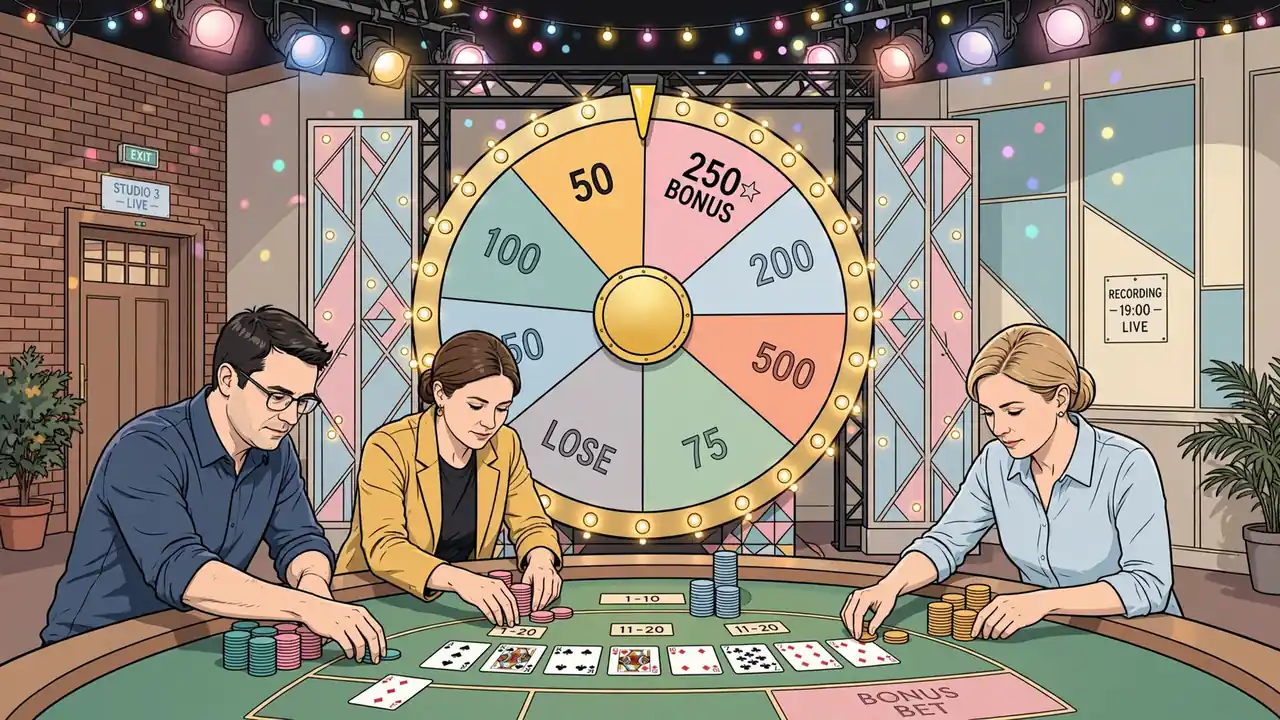
The operator’s licence is central to legality in Great Britain; game availability alone does not establish that a casino is authorised.
How UK Casino Licensing Applies to Crazy Time
For a British customer, the central regulatory question is not whether a website advertises Crazy Time, but whether the casino offering access to it is authorised to provide remote gambling. The UK Gambling Commission requires operators serving consumers in Great Britain to hold the appropriate licence. This requirement applies regardless of where the business is incorporated or where its technical equipment is located.
The Commission regulates commercial gambling in Great Britain and is the sole regulator for that activity. Its remit includes online casinos, so a casino offering Crazy Time for real-money play falls within the wider regulatory framework for remote gambling. The relevant status belongs to the operator: the presence of a particular game on a website does not, by itself, demonstrate that the site is licensed or that the offer is lawful for British customers.
What the licence requirement means
A company operating an online casino needs an operating licence issued by the Gambling Commission when it offers gambling to consumers in Great Britain. The Commission also issues personal licences to individuals whose roles require them to operate or manage gambling businesses. These are distinct forms of authorisation. A personal licence is connected with an individual, whereas the operating licence concerns the business providing the gambling service.
This distinction matters when examining claims made by casinos offering Crazy Time. A website may display corporate information, licence language or references to regulation, but those statements should be checked against the Commission’s public register. The relevant question is whether the business providing the service appears there with a current operating authorisation appropriate to its activities.
The framework applies to remote gambling even when the casino, its servers or other key equipment are outside Great Britain. Location alone therefore does not remove the licensing requirement. A remote operator cannot avoid the British regime simply by presenting itself as an overseas business while continuing to offer gambling to consumers in Great Britain.
The Gambling Act 2005 provides the principal legislative framework for gambling in England, Wales and Scotland. Northern Ireland is outside that Act’s territorial scope, so references to the British licensing regime should not be treated as a description of Northern Ireland’s separate arrangements. For the purposes of Crazy Time casinos serving customers in Great Britain, however, the Gambling Commission’s remote-gambling requirements are the relevant framework.
Casino Games: Slots, Live Tables and Online Play
Checking a casino before a deposit
A licence check should take place before funds are deposited, not only after a problem has arisen. The Gambling Commission’s public register is the appropriate place to verify the operator’s identity and licence number. The name on the register should correspond with the business responsible for the casino, rather than merely matching the name of a game, a marketing brand or an unrelated company mentioned in the website’s terms.
This is particularly important where several brands appear to operate under one corporate structure. The site’s brand name and the legal entity named in its terms may differ, but the relationship should be clear enough to identify the licensed operator. If the licence number cannot be verified, or if the register does not support the site’s claim, the casino’s regulatory status has not been established.
A search result, promotional page or statement that a casino is “UK licensed” is not a substitute for checking the public register. The register is also subject to change, so a licence statement copied from an older page cannot be treated as conclusive evidence of the operator’s present position. Verification should be based on the current register entry and the details shown there.
What licensing does and does not establish
A valid operating licence establishes that the casino is subject to the Gambling Commission’s regulatory framework for the activities covered by that licence. It does not establish that every product mentioned on the site is available, suitable or offered under identical conditions. Nor does the appearance of the Crazy Time name prove that a particular casino has a lawful UK-facing service.
Licensing should therefore be understood as a condition concerning the casino’s authority to provide remote gambling, not as a guarantee of a particular game or a statement about its outcome. The operator remains responsible for complying with the rules applicable to its licensed activities. The game’s presentation, availability and other characteristics are separate questions from whether the business is authorised to serve Great Britain.
Financial Risk
Crazy Time should only be played with money that can be afforded to lose. Licence verification is not evidence that gambling will produce a profit.
The legal position also does not remove the ordinary financial risk of gambling. Crazy Time should only be played with money that can be afforded to lose. Licence verification is an essential regulatory check, but it is not evidence that gambling will produce a profit or that any individual wager will succeed.
Crazy Time in an Online Casino Setting
Crazy Time can be encountered as part of an online casino’s remote gambling service rather than only in a physical casino environment. In this setting, the game is accessed through an internet-connected account, with the casino providing the interface through which the game is displayed and wagers are placed. The precise presentation may depend on the operator and the version of its casino platform.
An important distinction concerns availability. A casino website may offer a broad catalogue of games without including Crazy Time, while another operator may make it available as part of its live-casino selection. The presence of an online casino does not, by itself, establish that this particular game is included. Availability must therefore be established from the operator’s current game catalogue or the game interface presented after sign-in. A general claim that a site is an online casino is not evidence that it is an online casino with Crazy Time.
The phrase “Crazy Time online casino” can describe two related things. It may refer to the game being accessed remotely through a casino website, or to a casino service that lists Crazy Time among its available products. Those meanings should not be treated as interchangeable. The first concerns the method of access; the second concerns the contents of a particular operator’s catalogue.
Deal or No Deal Casino UK: Slot Qualification
Remote access in Great Britain
For regulatory purposes, remote gambling is not confined to an operator’s physical premises. The relevant question is whether gambling is being offered remotely to consumers in Great Britain. The Gambling Commission requires an operator serving those consumers through a remote service to hold the relevant licence. This requirement applies regardless of where the operator’s key equipment is located.
That framework matters when Crazy Time is presented through an online casino. The game’s digital availability does not place it outside the British regulatory system, and the location of a website or its technical infrastructure does not remove the licensing requirement for an operator targeting Great Britain. A remote casino service and a land-based casino are different ways of delivering gambling, but the remote service still falls within the Commission’s remit when it serves British consumers.
Online access also changes the practical setting in which the game is encountered. The casino account, the website’s game lobby and the operator’s remote gambling systems form the surrounding environment. Crazy Time may be displayed alongside other casino products, but its position in a lobby is not a regulatory endorsement and does not show that every listed product is available to every account. Operators can organise their catalogues differently, and games can be added, removed or restricted.
Availability
The presence of an online casino does not guarantee that Crazy Time is included in its current game catalogue.
The distinction between a game and its host platform is useful. Crazy Time is a product made available through an operator; the online casino is the service through which that product may be accessed. A reference to an online casino offering Crazy Time should therefore be read as a statement about the relationship between the two, not as evidence that the game is supplied by every online casino in the United Kingdom.
What online access does not establish
A game tile, promotional reference or search result is not enough to establish the terms on which the game can be used. It may indicate that an operator recognises the product, but it does not by itself show that the game is available for real-money play, that it is accessible from Great Britain, or that the operator currently offers it to all account holders. Those matters depend on the operator’s own service and its applicable restrictions.
The same caution applies to descriptions of “casino online Crazy Time” or “Crazy Time casino online”. Such wording identifies a desired combination of product and platform, not a category of casino that automatically meets a particular standard. The remote nature of the service explains how access takes place; it does not remove the need for the operator to comply with the rules applying to remote gambling in Great Britain.
Any decision to use an online casino remains a financial decision. Gambling should be limited to money that can be afforded to be lost, and the availability of a game should not be confused with a reason to wager. The online format may make access straightforward, but convenience does not alter the underlying possibility of loss.
Crash casino games in the UK: formats and access
Assessing Casino Sites That Offer Crazy Time
A site presenting Crazy Time should be assessed as a gambling operator, not merely as a webpage displaying a game title. The central question is whether the business is authorised to provide remote gambling to consumers in Great Britain. The Gambling Commission requires operators serving this market remotely to hold the relevant licence, regardless of where the operator or its technical equipment is located.
Licence checks come first
The operator’s licence number should be checked on the UK Gambling Commission’s public register before an account is funded. The register is more useful than a badge, logo or statement on the casino’s own website because it allows the business name, trading details and authorised activities to be compared with what the site claims.
The check should relate to the actual operator, rather than only to a software provider or payment company. A reference to Evolution, for example, would identify a game provider and would not by itself establish that the casino offering the game is licensed to accept British customers. Similarly, a polished interface, live-stream presentation or prominent Crazy Time branding does not demonstrate regulatory approval.
A site that cannot clearly identify the licensed business creates an avoidable uncertainty. The absence of a clear match on the register should be treated as a reason not to deposit, rather than as a minor administrative issue. A casino may be accessible online without having the authorisation required to offer remote gambling legally in Great Britain.
Licence Verification
- Locate the operator’s name and licence number
- Access the UK Gambling Commission’s public register
- Verify that the name on the register matches the business responsible for the casino
Account protections matter
Licence verification is only the first assessment. A suitable site should also make its account controls visible before money is deposited. Operators must verify a customer’s age before allowing deposits into a gambling account, so an account-opening process that appears to bypass age checks is not a reassuring sign.
New customers must be prompted to set a financial limit before their first deposit, with accessible controls for changing account-level limits. These tools do not make gambling risk-free, but they provide a practical way to restrict spending. Gambling should remain limited to money that can be afforded to lose; a site’s safeguards cannot turn a wagering activity into a dependable source of income.
Self-exclusion is another relevant feature. UK-licensed casinos must provide responsible-gambling tools, including self-exclusion. Where gambling is becoming difficult to control, an exclusion facility is more significant than promotional design or the range of advertised games. GAMSTOP may also be relevant to people seeking broader exclusion from participating operators.
Bonuses and displayed results
Promotions described as Crazy Time casino bonuses should be examined as account terms, not treated as evidence that one site is better than another. The important points include eligibility, payment conditions, expiry provisions and any restrictions attached to the offer. No bonus should be valued before its complete terms are available and understandable. Promotional wording cannot compensate for an unverified licence or weak account controls.
Displayed game results require similar caution. A history panel or recent-result record may describe earlier outcomes, but it does not establish that future outcomes can be predicted. It also does not prove that the operator is reliable. Results should therefore be treated as information about recorded past rounds, not as a basis for selecting a supposedly superior casino or constructing a guaranteed system.
Casino dice games in the UK: how they work
A properly identified operator should also provide an internal complaints process and access to an approved Alternative Dispute Resolution service. Those arrangements do not guarantee that every dispute will be resolved in a particular way, but their presence is part of the framework expected from a UK-licensed casino. Assessment is therefore strongest when licence identity, age verification, financial limits, self-exclusion and complaints arrangements are considered together rather than replaced by rankings or promotional claims.
Where Crazy Time Fits Among Live Casino Games
Crazy Time belongs to the live-casino category: an online presentation built around a live table or studio environment rather than a conventional computer-generated casino game. Its position within that category is best understood by comparing it with the wider selection of live products, not by treating the title as a separate type of gambling venue.
A live-casino lobby may bring together several kinds of game. Card-based tables can include blackjack and poker variants, while roulette represents the wheel-based side of the catalogue. Some operators also organise these products by table, studio, presenter, or game family. The exact arrangement differs between operators, so the presence of a live-casino section does not, by itself, establish that Crazy Time is available there.
A broader live-casino catalogue
Grosvenor provides a concrete example of how this market developed. The operator first introduced its live casino games in 2013, with a selection that included Blackjack, Texas Hold’em, and Roulette. That launch illustrates the established pattern of placing several live games within one online casino service rather than presenting each title in isolation.
Blackjack
Card-based tables available in the live casino environment.
Roulette
Wheel-based games representing a core part of the live catalogue.
Poker
Various poker variants offered as part of a live-dealer selection.
Against that background, Crazy Time can be viewed as one product within a broader live offering. Searches for a Crazy Time wheel game often reflect interest in the title’s wheel-centred identity, but the wider category is not limited to wheel games. A site may display Crazy Time alongside card tables, roulette tables, and other live products, with each title occupying its own position in the lobby.
This distinction matters when considering where the game can be found. A casino may advertise live casino generally while carrying only some of the products associated with that category. Conversely, a site that lists Crazy Time may place it under a particular studio, live-games menu, or dedicated game-show grouping. The category label is therefore a starting point for locating the title, not confirmation of its availability.
Finding the game within a live lobby
The most relevant signs are the casino’s own live-casino catalogue and the individual entry for Crazy Time. A listing should identify the game clearly rather than relying on an image of a wheel or on generic wording such as “live games”. The product name, game category, and access conditions should be visible before the account is used for gambling.
This approach also avoids confusing related products. Live roulette is still a roulette table, and live blackjack remains a card game, even when both are presented from a studio. Crazy Time may appear in the same general lobby, but its inclusion does not make every neighbouring title part of the same game. A wheel image alone is not sufficient evidence that the named product is offered.
Mines Casino Game in the UK: Evidence and Limits
The phrase “top Crazy Time online casino” also requires care. A broad live-game catalogue is not proof that an operator is better suited to this title, and the number of adjacent games says nothing about the quality or suitability of the service. The relevant question is whether the specific game is listed and whether the account conditions are clear.
Live presentation can make a casino catalogue appear more like a scheduled entertainment service than a static games menu. That presentation does not alter the underlying financial risk. Any decision to wager on Crazy Time should remain within money that can be afforded to lose.
Strategy Claims and the Limits of the Evidence
What a strategy can and cannot do
A Crazy Time strategy is often described as a method for choosing wagers, controlling stake size, or responding to previous results. Those are decisions made around the game, not mechanisms that alter its underlying outcome. A selection rule may organise play, but it cannot establish which result will occur next or provide a reliable route to profit.
This distinction is important because strategy language can make a speculative claim sound like a tested system. Terms such as “safe strategy”, “winning method”, or “guaranteed approach” imply a level of certainty that cannot be supported merely by explaining when or where a wager is placed. A sequence of successful rounds demonstrates that the sequence occurred; it does not validate the decision rule that preceded it.
Strategy Limits
Attention No strategy, including progression systems, can provide a reliable route to profit or overcome the underlying uncertainty of the game.
Progression systems require particular caution. Increasing or reducing a wager after a loss may change the size of later exposure, but it does not convert an earlier loss into information about the next outcome. The same applies to systems based on alternating selections, repeating a preferred choice, or stopping after a specified number of rounds. These may impose discipline on a session, yet none should be presented as a dependable way to overcome uncertainty.
The limits of pattern-based reasoning
Short sequences can appear to contain trends. A result that has not appeared recently may be treated as “due”, while a result that has appeared several times may be considered likely to continue. Such interpretations confuse an observed sequence with a predictive signal. A visible pattern can be described after the event without becoming a sound basis for the next decision.
The same problem affects claims built around timing. Waiting for a particular point in a session, following a particular presenter, or treating previous rounds as a calendar for future outcomes adds a narrative structure to the activity. It does not, by itself, demonstrate predictive value. A strategy should therefore be judged by evidence collected under defined conditions, rather than by isolated winning sessions or testimonials.
What a Crazy Time tracker shows
A tracker can record historical observations, such as the order in which results appeared or the frequency with which a chosen category was recorded. That may help describe a session and keep a record separate from memory. It does not turn historical data into a forecast, and a tracker should not be confused with a casino control, an official prediction tool, or proof of a favourable opportunity.
Chicken Road Game Casinos in the UK: What’s Known
A tracker is also vulnerable to selective interpretation. Recording only notable sequences can make a system appear stronger than it is, while ignoring unsuccessful sessions produces an incomplete account. Any assessment would require consistent records, clearly defined rules, and results examined over a sufficiently broad body of play. Even then, past observations would not establish certainty about future outcomes.
Sensible boundaries
The most defensible use of a strategy is administrative rather than predictive: setting a session budget, deciding in advance when to stop, and avoiding attempts to recover losses through larger wagers. Such measures limit exposure; they do not improve the probability of a particular result. Account-level controls and self-exclusion serve a different protective purpose and should not be marketed as winning systems.
Crazy Time should be treated as gambling, not as an investment or an analytical exercise with a guaranteed return. Only money that can be afforded to lose should be used, and promotional descriptions of systems should be read as claims requiring substantiation rather than as evidence of a reliable advantage.
The Game-Show Format and Its Place in UK Casinos
Crazy Time is presented as a live casino game show rather than as a conventional digital casino game. That distinction concerns presentation and setting, not a separate category of gambling outside the casino sector. In a UK casino context, the name refers to a live-dealer product delivered through an online gambling service, with the game-show identity forming part of how the experience is organised and displayed.
Live Casino
An online presentation built around a live table or studio environment rather than a conventional computer-generated game.
The phrase “live casino” can describe several different arrangements. It may refer to games conducted in a studio and transmitted to an online interface, rather than software displaying every element of the game independently. A game-show format adds another layer of presentation: the product is framed as a hosted entertainment programme, not merely as a static table with betting controls. That description identifies the character of the experience without establishing the precise rules, outcomes, or visual features of Crazy Time.
This distinction matters because the labels are often used interchangeably. “Crazy Time casino UK” can mean the game itself, a casino’s live-dealer catalogue, or an online page describing access to the product. “Crazy Time live casino” is narrower: it points to the live presentation of the named game. A casino may advertise live casino products without offering every game in that category, so the presence of a live-casino section does not, by itself, establish that Crazy Time is available there.
The wider UK casino setting has included live products for many years. Grosvenor first introduced its live casino offering in 2013, with card and casino games such as Blackjack, Texas Hold’em, and Roulette. That example places live casino within an established commercial format rather than treating it as a novelty created by one particular game. It also shows why a live game-show product can sit alongside more familiar table-game presentations while retaining a different tone and structure.
Crazy Time should therefore be understood through two connected descriptions. It is a casino product because it is offered within a gambling environment, and it is a game show because its live presentation is part of its identity. Neither description, on its own, confirms the availability of the product at a particular operator. Availability depends on the catalogue and service provided by that operator at the relevant time.
Live Dream Catcher Casino UK: Availability and Evidence
The title “Crazy Time live casino game show UK 2026” consequently combines the product name, the live format, and the British market in which the search is being made. It should not be read as evidence that every UK casino carries the game, or that the game has identical presentation wherever it appears. The name establishes the subject of the guide; it does not establish a particular casino’s current offering or supply a complete account of the game’s rules.
As with any form of gambling, participation should be limited to money that can be afforded to lose. The entertainment-led presentation does not alter that basic financial consideration, and the visual style of a game show should not be confused with evidence of a favourable outcome.
Free Play, Practice, and What Can Be Verified
Searches for a free Crazy Time casino game can refer to several different arrangements. “Free play” may mean a version that uses no real-money stake, a promotional balance, or access to the game without a deposit. These descriptions are not interchangeable. A page presenting Crazy Time as free should state which form of access is intended and whether any registration, eligibility condition or promotional rule applies.
The same distinction matters for free spins. A casino may use “free spins” as a general promotional phrase, but that wording does not by itself show that the offer applies to Crazy Time. Free spins are normally associated with qualifying game formats, whereas a live casino promotion may have different conditions or may not include this game at all. The title of an offer is therefore weaker evidence than its full terms.
Do
- Check the UK Gambling Commission’s public register
- Set financial limits before your first deposit
- Verify age requirements before funding an account
Don’t
- Rely on promotional wording as evidence of a licence
- Use credit cards for gambling deposits
- Treat a ‘demo’ version as a guarantee of real-money returns
A practice mode has a separate function. It can allow familiarity with the presentation without placing a real-money wager, but it does not demonstrate that the same casino provides the game for cash play, nor does it establish the conditions attached to any promotion. A free version should not be treated as a test of likely returns or as evidence that a paid session is low-risk.
Claims about a “safe” free Crazy Time casino also require separation. Free access alone says nothing about the operator’s regulatory status, account controls, complaints route or payment practices. A casino’s promotional language cannot replace verification of its current UK Gambling Commission licence on the public register. A free offer is not a guarantee of safety, and the absence of a stated price does not remove the need to check the operator and its terms.
Where a promotion is accepted, its conditions should be read before any account activity continues. Eligibility, game coverage, expiry provisions and restrictions may determine whether the advertised benefit can actually be used. Age verification remains required before a gambling account can receive deposited funds, and gambling should be limited to money that can be afforded to lose. Free access can reduce the immediate financial commitment, but it does not turn gambling into a risk-free activity.
Deposits, Bonuses, and Account Safeguards
A Crazy Time casino bonus is not a separate form of game protection. It is a promotional condition attached to an account, and its value depends on the operator’s published terms. A welcome offer, deposit bonus or no-deposit promotion may have eligibility rules, restricted games, expiry conditions and withdrawal requirements. Those conditions should be read before accepting the offer rather than inferred from its headline description. The availability of a particular Crazy Time bonus in the United Kingdom cannot be assumed from advertising alone.
JetX Casino Game in the UK: What the Evidence Shows
Age verification must take place before an operator allows a customer to deposit funds into a gambling account. Online gambling in the UK is lawful for people aged 18 or over where the casino holds the required UK Gambling Commission licence. Account checks can also affect withdrawals: a casino may need to confirm identity and payment ownership before releasing a payout. Promotional balances and winnings may be treated differently under the published terms, so the account rules are relevant to any claim about Crazy Time casino payouts.
Funding methods are subject to specific restrictions. UK-licensed casinos cannot accept credit cards for gambling, including credit-card funding routed through a money service business. A wallet cannot be used where it enables credit-card funds to finance gambling. A payment method shown on a casino page therefore does not by itself establish that it can lawfully be used for a British gambling account.
New customers must be prompted to set a financial limit before making their first deposit. Licensed remote operators must also provide accessible account-level controls, allowing limits to be managed after registration. Responsible-gambling tools, including self-exclusion, must be available. GAMSTOP is a separate national self-exclusion service; a claim that a casino is “not on GamStop” should not be treated as evidence that the account is safer or that the operator is suitable for the British market.
Summary
- Always verify a casino’s licence via the UK Gambling Commission public register.
- Use responsible gambling tools like financial limits and self-exclusion.
- Distinguish between the game product and the operator’s platform.
- Understand that past results and strategies do not predict future outcomes.
Any bonus decision should be considered alongside the account’s limits, payment rules and complaint arrangements. UK Gambling Commission licensees must provide an internal complaints process and access to an approved Alternative Dispute Resolution service. Gambling should be limited to money that can be afforded to be lost, regardless of whether the promotion is described as a Crazy Time casino bonus, free offer or deposit incentive.
Rules, Multipliers, and Great Britain Slot Limits
References to Crazy Time rules concern the operation of the individual live game: how a round is organised, how outcomes are recorded, and how any multiplier or score is applied. Those details should be taken from the rules displayed by the operator or game provider rather than inferred from the title alone. A description of a multiplier is not, by itself, evidence of a more favourable result, and a displayed score should not be confused with a measure of profit.
The regulatory question is separate. Great Britain’s stake controls for online slots are described in a specialist affiliate review as applying by game cycle. In that account, the ceiling is £5 for adults aged 25 or over and £2 for adults aged 18 to 24. Because this information is subject to change and comes from that type of secondary source, it should not be treated as a permanent description of every casino game.
The same review distinguishes those slot limits from roulette and blackjack: the stated slot ceilings do not apply to either of those table-game categories. That distinction matters when considering a live casino title. A game’s presentation as a live show does not, on its own, establish which regulatory category governs its stake. The applicable classification and the operator’s displayed terms remain relevant.
Consequently, searches for Crazy Time casino rules, live-game rules, multipliers, or scores should be separated from questions about Great Britain stake controls. The first group concerns the title’s own documented operation; the second concerns the legal treatment of a product category. Neither a multiplier nor a score establishes that a casino is trusted. A legitimate UK-facing operator must still be checked on the UK Gambling Commission’s public register before a deposit, and gambling should be limited to money that can be afforded to be lost.
Crazy Time Demo Availability
A “Crazy Time demo” generally refers to a version presented without a real-money wager. The wording can be confusing because Crazy Time is a live casino game show, while some pages describe it as a “demo slot” or “slot demo”. Those labels do not establish that the product is an online slot, nor do they confirm that a particular casino provides a playable demonstration.
A live-casino demo can take several forms. It might be a static information page, a video preview, or an interactive interface that resembles the live table without processing a cash wager. These formats should not be treated as interchangeable. A preview can show presentation and layout, but it does not necessarily reproduce the operation of the live service. Similarly, a practice interface may not reflect the availability, conditions, or account requirements attached to real-money play.
The phrase “Crazy Time casino demo UK” also does not identify a specific product or operator. Availability can depend on how an individual casino presents its game catalogue and whether it supports a non-wagering version. A page using “demo” in its title therefore requires careful reading: the label alone is insufficient to establish what is offered.
Where a demonstration is unavailable, the game should not be represented as a slot merely because that terminology appears in a page title. Conversely, where a casino displays a practice option, its relationship to the live game should be made clear before any deposit is considered. Any subsequent gambling should remain within an amount that can be afforded to lose.
What are the online slot stake limits in Great Britain?
The limit is £5 per game cycle for adults aged 25 and over and £2 for adults aged 18 to 24. These limits do not apply to roulette or blackjack.
Are online casino games licensed and regulated?
Yes. Operators offering remote gambling to consumers in Great Britain must hold the relevant Gambling Commission licence, and the Commission regulates online casinos.
Is LuckyPays licensed by the UK Gambling Commission?
The Gambling Commission’s public register dated 26 September 2026 does not show an entry for LuckyPays or its stated domain, luckypays.io.